
Holistic Assessment SIG
About Us
To succeed in the modern society, including in the workplace, young people need to complete their education with more than the academic knowledge, skills and understanding assessed in traditional school subjects. They need a broad range of 21st-century competencies coupled with other personal attributes such as solid ethical values, positive learning dispositions, and high levels of personal wellbeing. This is the concept of holistic education, which has a deep-rooted history in several European pedagogical philosophies. Both cognitive skills (such as problem-solving, critical thinking, and creativity) and so-called ‘non-cognitive’ skills (such as communication, collaboration, and perseverance) are important. Assessing personal competencies and attributes accurately, and understanding how they interact to affect educational outcomes and life chances, are significant challenges in the assessment field. Despite its importance, however, holistic assessment is still an under-researched area. This SIG aims to study theories and practices for assessing cognitive and non-cognitive skills and attributes, and provide recommendations for effective assessment tools.
Holistic Assessment SIG position paper
Building Holistic Systems for Educational Improvement: From Curriculum to Pedagogy to Assessment Principles
A position paper by Carolyn Hutchinson, Irenka Suto, Stuart Shaw, Tim Oates and Gulbakhyt Sultanova
This position paper, developed by members of AEA-Europe’s Holistic Assessment Special Interest Group (SIG), explores how curriculum, pedagogy, and assessment can be coherently aligned to support truly holistic education. It argues that educational systems should nurture the full development of learners — cognitive, social, emotional, and ethical — and not merely focus on disciplinary knowledge and skills.
The paper invites readers to reflect on how transversal skills such as creativity, collaboration, critical thinking, and self-regulation can be meaningfully embedded and assessed across learning systems. By linking curriculum, pedagogy, and assessment, the authors propose principles for designing educational practices that improve both individual and societal outcomes.
Members of the AEA-Europe community and other interested readers are warmly invited to share comments, questions, or examples of practice with the Holistic Assessment SIG. Responses can be submitted via the SIG’s dedicated email address: holisticassessment.sig@aea-europe.net

Become a Member
Membership of the SIG is open to all AEA-E members. Please use the button below to join. If you are not yet a member of AEA Europe, you can join here.
Request SIG Membership

Contact Us
Please feel free to reach out via email or connect with our SIG on LinkedIn to stay informed about updates and community developments.
Access to the closed LinkedIn group is only permitted to SIG members.
Get to Know the SIG
Steering Committee
Learn who the members of the Steering Committee are, and don’t hesitate to contact them during the conference or online.
Chair
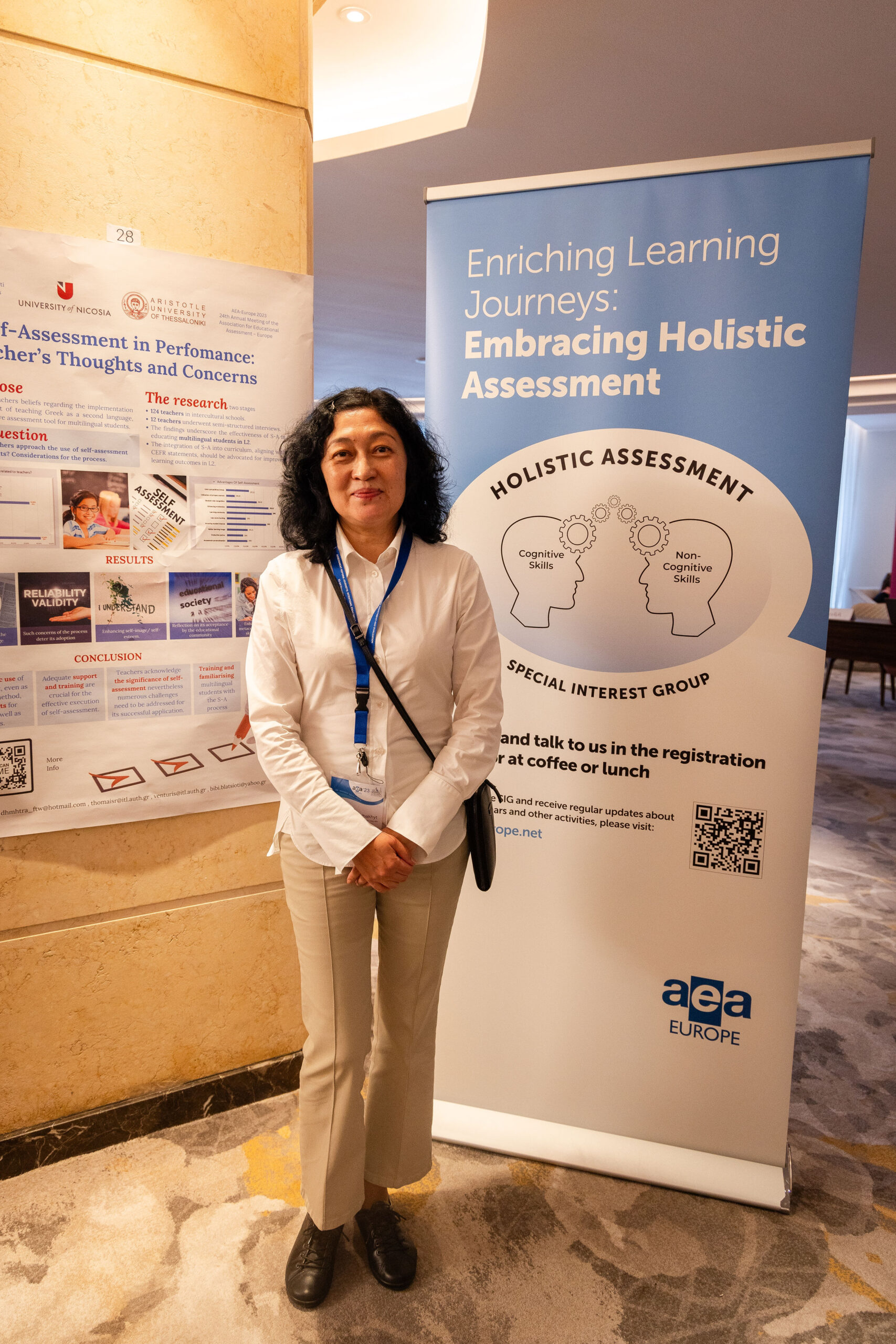
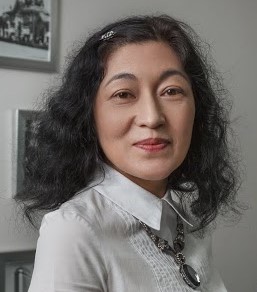
Gulbakhyt Sultanova, Nazarbayev, Intellectual Schools, Kazakhstan
Members
Aliya Assylbekova, Nazarbayev Intellectual Schools, Kazakhstan
Georgina Billings, University of Cambridge, UK
Laura Katkeviča, University of Latvia, Latvia
Emma Rawlings Smith, AQA, UK
Milagrosa Sánchez-Martín, Loyola University Andalusia, Spain
Our Activities
Learn more about our SIG’s activities, including webinars and blog contributions, and stay connected with ongoing discussions in the field. Browse through the posts in the carousel to explore recent content, discover key insights, and engage with the work of our community.
Reimagining Assessment for a Future-Focused Curriculum
Reimagining Assessment for a Future-Focused Curriculum
Beyond Cognitive Load: Is There a Parallel Theory for Non-Cognitive Learning?
Beyond Cognitive Load: Is There a Parallel Theory for Non-Cognitive Learning?
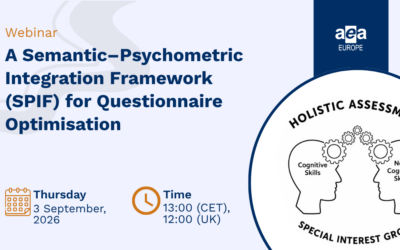
Holistic Assessment Special Interest Group Webinar
“A Semantic–Psychometric Integration Framework (SPIF) for Questionnaire Optimisation”
What Can Holistic Assessment Still See When AI Enters the Learning Process?
Generative AI is changing education in ways that go beyond plagiarism debates. The issue is whether schools can still see how learning happens.

Holistic Assessment SIG Webinar
“Building holistic systems for educational improvement: From curriculum to pedagogy to assessment principles”
A holistic approach to educational assessment – without any candles or rose petals in bathtubs
Irenka Suto, Head of Assessment and Research, Cambridge Centre for Evaluation and Monitoring
Special Interest Groups & Networks
If you would like to join the Holistic Assessment SIG, please provide the following information which we will only use to engage with you and send you information about the SIG’s activities. Thank you.
Learn who the members of the Steering Committee are, and don’t hesitate to contact them during the conference or online.