
Rethinking what is assessed in knowledge-rich qualifications
by Irenka Suto
Researchers in the field of holistic assessment would agree that supporting schools to get learners ready for the future requires much more than assessing strong subject knowledge alone. It also requires careful attention to the skills learners are expected to develop, practise, and demonstrate through classroom learning and assessment. Over the past year, we have undertaken a three-phase review of skills coverage across Cambridge International AS and A level examinations and the teaching and learning resources associated with them. These qualifications are taken by students in over 130 countries around the world. Starting from the position that knowledge and skills development are deeply intertwined, our aim has been to better understand what our qualifications already offer in this respect.
Phases 1 and 2 of the review focused on specimen examination papers across a total of twenty different AS and A level subjects. Together, these two phases provide clear evidence that all the assessments analysed are rich in complex thinking skills, including all of Bloom’s higher order thinking skills. Moving beyond Bloom, skills that are arguably integral to success in higher education, such as kind problem-solving skills, systems thinking skills, and metacognitive skills, are widely embedded, even where they do not appear explicitly within formal assessment objectives. The review also confirmed that examination technique at AS & A level draws heavily on problem-solving and metacognitive skills, further reinforcing their central role.
Our review identified meaningful differences across subjects in the balance of skills. For example, creative skills are assessed in subjects such as Art & Design and Global Perspectives & Research, as well as in English language and several languages and humanities subjects, but less so in Biology and Business. Business, on the other hand, is particularly rich in the skills of finding connections within and between systems. Some differences between AS and A level were evident too, reflecting progression in the use of particular skills.
Phase 3 extended the review beyond examinations to explore how skills are taught in classrooms. Subject specialists analysed teacher guides and student coursebooks across eight popular subjects, exploring opportunities to develop or practise a wide range of transversal skills through exercises, discussions, and other tasks. The findings here were positive, and it was interesting to confirm that in some subjects, we encourage and support the teaching of many more skills than we can assess summatively through high stakes assessments. Teachers using our resources and adopting an active teaching and learning approach will find extensive opportunities in almost any subject to foster a great variety of transversal skills, including leadership, self-management, innovation, and digital skills. They will also find many activities that engender the executive functions that underpin the use of these skills, such as working memory, inhibition, and cognitive flexibility.
Taken together, the findings suggest that a learner taking three or four AS & A levels is highly likely to be assessed in a broad range of skills, particularly where Global Perspectives & Research is included. Arguably, when learners become well-practised in exercising and demonstrating these skills and values, they can be understood to have strengthened personal attributes such as being confident, responsible, reflective, and innovative in ways that are grounded in subject learning rather than detached from it.
For assessment organisations, this matters. Our review findings show that knowledge-rich qualifications can also support a broad and meaningful range of skills, both through assessment and through classroom practice, supporting an education that is more holistic than might appear at first glance. The next challenge is to continue strengthening the visibility and coherence of these skills, so that teachers, learners, and the wider public can see clearly how qualifications support school-leavers to be genuinely ready for higher education, work, and the future beyond.
About the Author
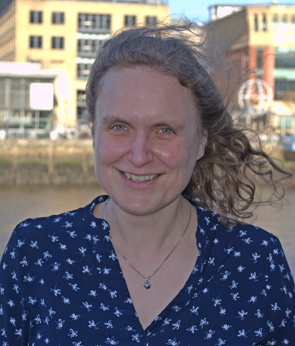
Irenka Suto
Dr Irenka Suto is the Head of Secondary Curriculum at Cambridge International Education. She holds a degree in Natural Sciences and a PhD in Assessment from the University of Cambridge. With over 100 journal and conference publications, Irenka spent many years in Cambridge University Press and Assessment’s research division, leading programmes to develop and evaluate curricula and assessments. She also directed the development of adaptive baseline assessments for several years.
From the Community