
Teaching and assessing in higher military education – when worlds combine
By Marte Søve Syverud
10 months ago, I left my position as an associate professor in teacher education, for a similar position at the Norwegian Defence University College. A scary leap into an educational context I knew very little about. Within a few months I would learn that assessment in military education involves widespread methods and formats, from testing and measuring to holistic assessments. I discovered that military education is surprisingly similar to civil education in many ways, however there are some striking differences. Finally, I discovered that the double set of rituals tied to assessment procedures is fascinating. Seemingly, teaching and assessing in military higher education combines practices typical in higher education with military rituals and culture and has developed its own teaching and assessment culture specific to professional military education.
Testing and assessment
As my field of expertise is assessment, much of my time the first months on the job went to exploring the methods of assessment applied at the Norwegian Defence University College. I soon discovered that assessment at different levels of our university college is like assessment in other Norwegian higher education institutions. Our students, however, are not only assessed for academic achievement. They also need to pass a physical test each year, and the same goes for most of their teachers. Staff at the Norwegian Defence University College are either employed as military or civil personnel but only staff employed as military personnel undergo regular physical training. Also, our students are selected in a different manner than students applying for other Norwegian universities. When students apply for placement in higher education in Norway, the ranking of students is done based on overall achievement grades and exam grades on students’ final diplomas (there are some exceptions to this as a few study programs select students through entrance exams). Students applying for placement at the Norwegian Defence University College, however, are ranked based on a multitude of factors besides their final diploma from upper secondary education such as results from physical tests, field exercises, theoretical tests, medical tests and interviews. This implies that not only are a variety of assessment formats in use at the Norwegian Defence University College, but different assessment paradigms are also co-existing.
Double set of rituals
From my previous research on assessment, I was often amazed by examiners’ almost ritualistic practices of specific parts of exams, which often seemed to reflect a consciousness of both roles and established practices. In professional military education, I discovered yet another layer to this, as teachers and students in many assessment situations conserve their military rituals, in addition to performing the rituals expected in the assessment situation. An example of such would be endorsing dress code and performing the appropriate military salute before commencing and finishing an oral exam.
So alike yet so different
When starting my position, I had next to no previous knowledge about professional military education. However, I was soon struck by the similarities between teacher education and professional military education. Like, student teachers, many of our students are not first and foremost motivated by academic achievement or the thoughts of writing a master’s thesis. Rather, they are motivated by the career opportunities that come with the degree. Like teacher education students they are motivated by the work they will be allowed to do when finishing their education, and they often view this work as a greater good.
As for differences, the number of applicants for professional military education and teacher education are worlds apart. Unfortunately, while many institutions offering teacher education in Norway have much fewer applicants than available study places, there are approximately 11 applicants for each available study place in professional military education.
Another difference between professional military education and civil education in Norway, is that all students and teachers alike are employed by the Norwegian Armed Forces, making students and teachers colleagues. This seems particularly pertinent to military teacher staff who are very conscious about socialising their students into the military profession.
The relevance of assessment cultures as concept
In further exploring assessment in military higher education, I believe that the concept assessment cultures is highly relevant. What are the ideas, customs, attitudes, behaviours and values learned and shared within military higher education assessment? Is assessment in professional military education a distinct assessment culture? Or is the assessment culture like that of higher education in other Norwegian institutions, only within a different professional context? And how does this matter?
About the Author
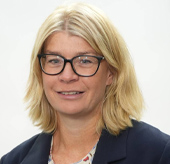
Marte Søve Syverud
Norwegian Defence University College
Marte Søve Syverud is an associate professor in Pedagogy and Educational Leadership at the Command and Staff College at the Norwegian Defence University College. Her background is in lower and upper secondary education, and in teacher education. Syverud’s thesis concerns teachers’ practices of oral exams. Syverud has presented her research at conferences nationally and internationally.
Besides her interest in assessment cultures and educational assessment Syverud is a member of the research group Studies in Education Policy and Education Practice (SEPP) and a member of Association for Educational Assessment Europe (AEA). She is currently the Chair of AEA’s special interest group Assessment Cultures.
Read the Latest Articles
In addition to the annual conference, the AEA-Europe publishes a range of blogs and organizes webinars related to educational assessment. These activities support ongoing discussion, professional development, and knowledge exchange within the community throughout the year.
Participants and researchers can explore topics connected to assessment practices, policy developments, innovation, and current challenges in the field. Feel free to explore these resources and stay connected with the wider educational assessment community.