
When it comes to vocational education and training, can China really learn anything from the UK and Germany?
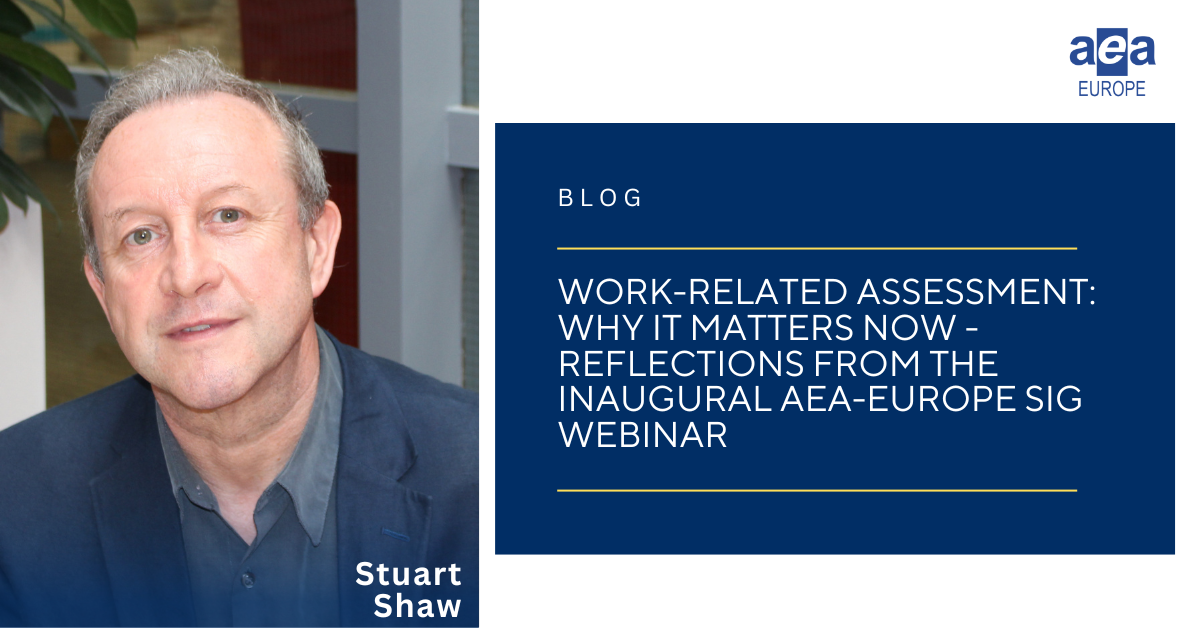
By Eleanor Andressen and Stuart Shaw
When it comes to vocational education and training, can China really learn anything from the UK and Germany?
Eleanor Andressen and Stuart Shaw
The connections between assessment and employment ought to be clear. If you are going to learn about something intended to result in employment, being assessed on the skills and knowledge you need to apply in that setting is surely common sense.
If employers are closely engaged both in the design and delivery of relevant standards, training programmes and progression routes, it stands to reason that they will value prospective employees who hold the resulting qualifications, and that those individuals will recognise and be more effective in the roles they are required to fulfil. The links to personal and national economic success follow as a result. On this basis, the German apprenticeship system has acquired an international reputation for excellence.
So why does England keep adding new Qualifications?
It’s a fair question. And why do those qualifications always keep the route to university open at the price of being less skills-based and therefore potentially less valued by employers?
Surely, they just need apprenticeships, and general qualifications that lead to university? Employers and stakeholders are often confused by the plethora of ‘vocational’ qualifications and fall back on long-established A levels, and often a degree, as a measure of an individual’s potential. The latter has been reinforced by successive policymakers since the 1990s.
Only recently has Prime Minister Burnham suggested that there is another way. Not an increase in apprenticeship in this case, but an increase in opportunities for young people to experience and hopefully choose skilled labour routes to employment such as becoming an electrician or plumber.
What could China learn?
In an upcoming handbook chapter, the authors explore what a third jurisdiction, China, could learn from the markedly different German and English systems. It explores the benefits and limitations of the two well-established systems in terms of their ability to offer features of TVET training and assessment practice which can be adopted or adapted in a third national context—in this case, China, seeking to rapidly acquire skills and the opportunities to do so.
It outlines the origins of the English and German TVET systems in particular and identifies key elements and characteristics of their policy, structure, and assessment practice and cultures, which have been explored in the context of their ability to support policy reforms relating to vocational provision in various other jurisdictions. The chapter draws on the literature relating to policy transfer and vocational reform, and on international project documentation and national policy documents.
Different countries, familiar challenges
Locations and cultures may differ, but the barriers and drivers of effective vocational education and training remain remarkably similar in many countries. At the very least, we can help stakeholders in China to avoid some of the pitfalls encountered in other countries as we all try to equip those entering and already in the workforce with the skills they need for future economic success.
The authors will present their chapter as a webinar – a collaboration between AEA Europe’s Assessment Cultures, and Work-Related Assessment Special Interest Groups, on the 15th September between 1pm and 2pm.
About the Authors

Stuart Shaw
Stuart is an educational assessment researcher, consultant, and author. He is Honorary Associate Professor of University College London in the Institute of Education – Curriculum, Pedagogy & Assessment. Stuart has worked for international awarding organisations for over 20 years and is particularly interested in demonstrating how educational, psychological, and vocational tests seek to meet the demands of validity, reliability, and fairness.

Eleanor Andressen
Eleanor has worked throughout her career in qualification, assessment development, and regulation for awarding organisations in England, with a particular interest in employers’ roles in technical and vocational education. She has researched learning design, apprenticeships, assessment, and the impact of technology on examinations and learner outcomes. She has also designed and delivered training on higher vocational education in the UK for universities in China. An active member of AEA-Europe, Eleanor chairs the Assessment Cultures SIG webinars, serves as a peer reviewer for the Higher Education, Skills and Work-based Learning journal, and judges the annual e-Assessment Awards.
Read the Latest Articles
In addition to the annual conference, the AEA-Europe publishes a range of blogs and organizes webinars related to educational assessment. These activities support ongoing discussion, professional development, and knowledge exchange within the community throughout the year.
Participants and researchers can explore topics connected to assessment practices, policy developments, innovation, and current challenges in the field. Feel free to explore these resources and stay connected with the wider educational assessment community.